 See Google Review
 See Practo Review
 WhatsApp US
Digital technology has changed how implant-supported restorations are planned and fabricated. One technology used in advanced full-arch implant workflows is MicronMapper photogrammetry, which records the three-dimensional positions of multiple dental implants digitally. At Dr. Rahul’s Dentaville in Hiranandani Estate, Thane, digital dentistry is supported by technologies such as CAD-CAM, 3Shape scanning, CBCT, 3D printing, and […]
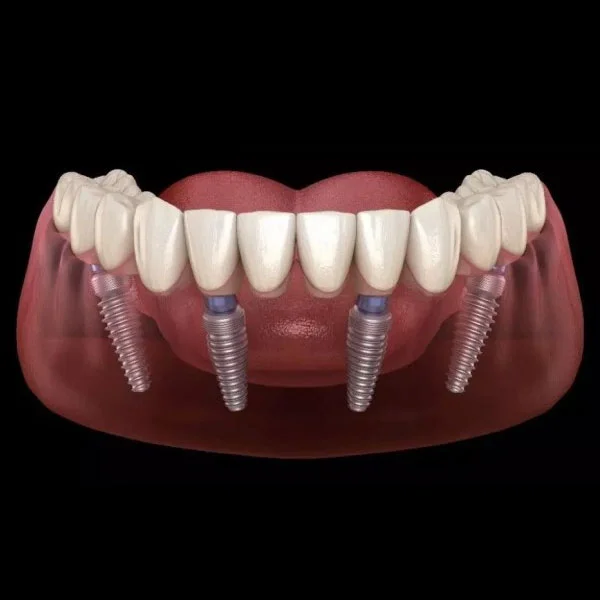
Digital technology has changed how implant-supported restorations are planned and fabricated. One technology used in advanced full-arch implant workflows is MicronMapper photogrammetry, which records the three-dimensional positions of multiple dental implants digitally.
At Dr. Rahul’s Dentaville in Hiranandani Estate, Thane, digital dentistry is supported by technologies such as CAD-CAM, 3Shape scanning, CBCT, 3D printing, and an in-house dental laboratory. MicronMapper photogrammetry can form part of this digital workflow when accurate implant position data is required for full-mouth or full-arch implant prosthesis planning.
MicronMapper is a dental photogrammetry system designed to capture the three-dimensional positions of dental implants.
During the process, dedicated markers are connected to the implant or implant-abutment positions. The photogrammetry system records these markers and creates digital information representing the spatial relationship between the implants.
This information can then be incorporated into a digital implant workflow for prosthetic design.
Unlike conventional physical impression techniques, photogrammetry records implant positions digitally. This can be particularly useful in full-arch cases where several implants must be accurately related to one another.
In a full-mouth implant restoration, the prosthesis has to relate correctly to multiple implant positions.
Even small discrepancies in the recorded implant positions can affect the digital design and subsequent fabrication process. Accurate data acquisition therefore plays an important role in the overall implant-prosthetic workflow.
Research published in the Journal of Prosthetic Dentistry has evaluated MicronMapper in complete-arch implant scanning. An in-vitro study reported lower RMS deviation values for MicronMapper than the intraoral scanning techniques tested in that study.
A later clinical study also found that MicronMapper provided reliable digital acquisition of complete-arch implant positions, although accuracy varied between the scanning techniques evaluated.
These findings support the role of photogrammetry as a useful digital data-acquisition method, while the final clinical result still depends on the complete treatment workflow.
A full-arch digital implant workflow may involve several stages:
MicronMapper is used to digitally record the spatial position of the implants.
The implant position data can be integrated with other digital records required for treatment planning and prosthetic design.
The digital information can then be used within CAD software to design the implant-supported prosthesis.
The design process can account for factors such as implant positions, prosthetic space, occlusion, and the planned restoration.
Once the design has been reviewed and finalized, CAD-CAM technology can be used for manufacturing the restoration.
At Dr. Rahul’s Dentaville, the clinic’s existing digital setup includes an in-house CAD-CAM dental laboratory, allowing digital restorative workflows to be carried out within the practice.
Full-arch implant rehabilitation presents different challenges from restoring a single implant.
Multiple implants need to be accurately related to one another, and the prosthesis must be designed around the patient’s clinical and prosthetic requirements.
Photogrammetry can help by providing a digital record of implant positions without relying on a conventional physical impression for that specific data-capture step.
This can make photogrammetry particularly relevant to full-arch implant-supported restorations and full-mouth rehabilitation workflows.
When appropriately indicated, a photogrammetry workflow may offer several pr